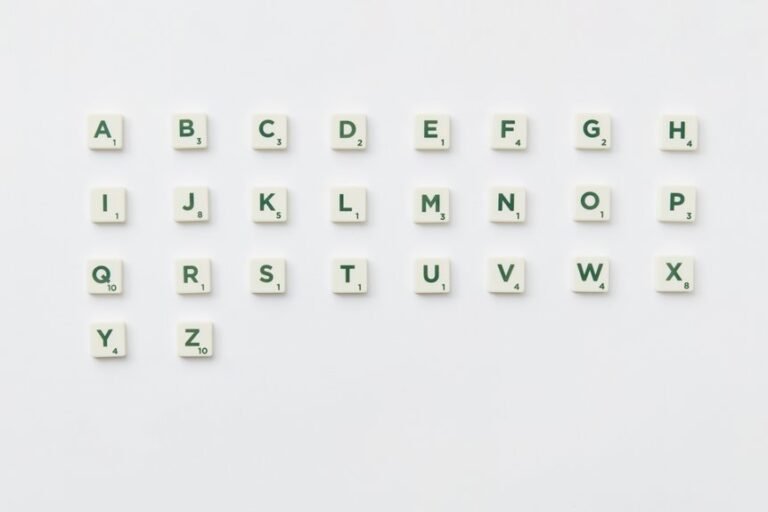
Qqamaeuaiabxaeeatgbhafmaqqagafcaqqbmaesa

The string invites a careful, context-aware reading that resists straightforward plaintext. It functions as a scaffold for pausing, emphasis, and emergent meaning, rather than a fixed message. Its capitalization and rhythm shape information density, suggesting entropy in discourse. Such a framework yields patterns readers can hypothesize about, yet leaves substantive certainty unresolved. The artifact thus stands as a disciplined curiosity, poised to reward meticulous scrutiny beyond initial impressions.
What Does the Scrambled String Really Mean Contextually?
The scrambled string, Qqamaeuaiabxaeeatgbhafmaqqagafcaqqbmaesa, presents a puzzling lexical surface whose value cannot be read through straightforward decoding alone. This analysis treats context as emergent, not explicit, insisting on disciplined interpretation.
The discourse on entropy clarifies information density shifts, while punctuation choreography guides reader pauses and emphasis, revealing structuring cues without asserting fixed meaning. Hence, interpretation remains provisional and context-dependent.
How Language Patterns Emerge in Playful Text Surprises
Playful text surprises crystallize when patterns emerge from constraint-driven surface variations. The analysis traces how phonotactic and orthographic constraints generate predictable folds in randomness, guiding readers toward recognizable motifs. In this phenomenon exploration, authors observe recurrent motifs, rhymes, and allusions that surface without explicit intents. This attention to pattern emergence clarifies how playful forms reveal underlying cognitive organization and communicative flexibility.
Decoding the Origins: Cultural Echoes and Cognitive Curiosities
Origin and transmission of these linguistic curiosities reveal how culture and cognition co-create symbolic repertoires.
The analysis traces how cryptic linguistics encode collective memories, while cognitive biases shape interpretation and novelty.
Cultural echoes surface as shared motifs and constraints, guiding decoding strategies.
The discourse favors precise, analytic exposition, acknowledging playful rhetoric as a deliberate, liberating instrument within structured inquiry.
Practical Frameworks for Exploring Enigmatic Sequences
Practical frameworks for exploring enigmatic sequences emerge from recognizing that decoding activity rests on disciplined methodology rather than mere pattern spotting. The approach delineates steps: hypothesis, data collection, and iterative testing, ensuring traceable reasoning. It highlights enigmatic sequences, playful text, language patterns, and cognitive curiosities as focal points, translating abstract puzzles into verifiable insights for a freedom-loving audience seeking rigorous clarity.
Frequently Asked Questions
Is There a Hidden Message Hidden in the String?
There is no verifiable hidden message; the sequence appears random. The analysis notes lack of rhythmic pattern warranting definitive claims, as any perceived structure may arise from coincidence rather than intentional encoding, inviting readers toward freedom through skeptical linguistic scrutiny.
Does the String Form Any Recognizable Acronym or Code?
The string does not form a recognizable acronym or standard code. However, the coincidence of its letters invites an enigmatic string, inviting linguistic exploration; analytically, it defies straightforward decoding while suggesting deeper patterns for those pursuing linguistic freedom.
Can the Sequence Map to a Musical or Rhythmic Pattern?
The sequence suggests potential rhythmic mapping, though not a fixed musical cadence. It invites stylistic decoding, as phonetic rhythm may hint at irregular pulses. Analysis emphasizes linguistic precision, while acknowledging freedom in interpretation and melodic imagination.
Are There Any Practical Parsing Tools Recommended?
Practical parsing exists, though tools vary; practitioners should evaluate for stability and language scope. The recommendation favors robust libraries, scripting flexibility, and clear docs. Lingual experimentation shapes the future influence of practical parsing and tool recommendations.
How Might This Influence Future Linguistic Experiments?
The question suggests future experiment design will be informed by observed data cues, while hidden pattern implications require cautious interpretation; thus, future experiments may adjust hypotheses accordingly to reveal systematic tendencies beneath surface variation.
Conclusion
In tracing the scrambled string’s surface, the analysis uncovers not a fixed message but a lattice of cues—pauses, emphases, and emergent rhythm. The sequence functions as a linguistic experiment in entropy, inviting readers to hypothesize rather than decode. Its value lies in provoking disciplined interpretation, not in delivering certainty. As patterns align and diverge, the piece sustains suspense: what might appear random reveals, under scrutiny, a carefully structured play with language’s possibilities. The final reading remains intriguingly incomplete.