Is Famous 6/8 Songs Worth Exploring? Everything Explained

Exploring famous 6/8 songs reveals how rhythm threads through melody, harmony, and mood without imposing rigid forms. The duple-triplet sway offers a flexible pulse that shapes phrasing and emphasis. These tracks become case studies in balance: groove guiding cadence while allowing expressive nuance to breathe. They map possible arcs rather than enforce limits, suggesting a careful path for composers and performers. The question then becomes not just what 6/8 can do, but what it invites next.
What Makes 6/8 Groove Catchy and Why It Matters
The 6/8 groove captivates listeners through its lilting triple feel, where two groups of three eighth notes create a rolling, pendulum-like motion that differs from the steadier 4/4 pulse.
In this frame, rhythmic tension emerges from accent placement and subdivision, clarifying how swing vs. groove shape perception, guiding energy flow while maintaining accessible freedom for diverse musical aims.
Recognizing 6/8 in Melodies, Chords, and Arrangements
Recognizing 6/8 in melodies, chords, and arrangements involves tracing how the compound feel threads through melodic contours, harmonic progressions, and structural layout. Analysts identify a persistent duple-triplet sway, where a catchy rhythm embeds in line cadences and bass movement.
The melodic contour reveals flowing arcs, while chords support the pulsing undercurrent, shaping expressive, freedom-minded textures.
Landmark 6/8 Songs and What They Teach Us
Are 6/8 songs that became touchstones truly redefining phrasing, rhythm, and mood? The discussion identifies landmark songs as maps rather than rules, showing how grooves and rhythm drive perception while melodic contours illuminate emotional arcs. They reveal harmonic progressions as flexible scaffolds, encouraging listening freedom. These examples illustrate how 6/8 shapes expressive choices without constraining interpretation.
Practical Guide to Writing in 6/8 Without Forcing It
Navigating 6/8 composition without forcing feel requires a deliberate balance between groove and phrase; a writer should treat the 6/8 pulse as a living constraint rather than a rigid rule.
The guide emphasizes rhythmic phrasing and precise cadence, favoring natural motion over metronomic rigidity, while allowing subtle deviations.
It details groove articulation as the core to expressive, unfettered 6/8 writing.
Frequently Asked Questions
How Does 6/8 Differ From 3/4 in Feel?
6/8 feel differences arise from two main accents: a compound duple pulse versus a simple triple, creating momentum and sway; 3/4 feels steadier and linear. 6/8 enables heavy rock viability with agile rhythmic drive.
Can 6/8 Work in Heavy Rock or Metal?
Yes, 6/8 can power heavy rock or metal, yielding heavy riffs and dynamic tempo shifts that drive propulsion and contrast, while maintaining groove; it rewards experimentation, balancing aggressive accents with flowing subdividing for a freer, expressive feel.
Are There Famous 6/8 Composers Beyond Classical?
A quiet tide of rhythm reveals: yes, there are famous 6/8 composers beyond classical. The modern landscape includes famous film, non classical, and crossover genres, where lyrical storytelling and bold grooves shape enduring, freedom-loving musical visions.
What Instruments Best Suit 6/8 Grooves?
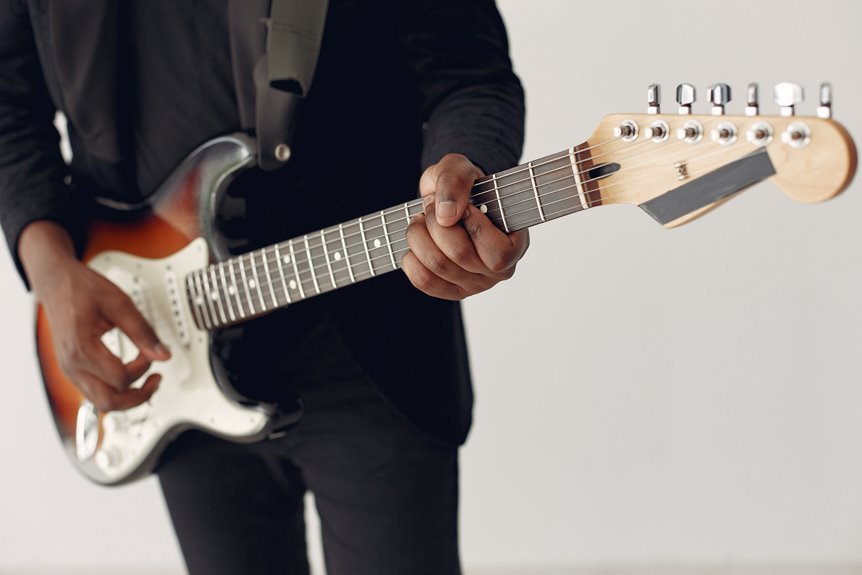
Instruments best suiting 6/8 grooves favor expressive timbres: drums, bass, guitar, and keys, with woodwinds or strings adding color. Groove compatibility thrives where rhythmic subtlety balances syncopation, allowing space for melodic flow and dynamic nuance.
How to Spot 6/8 in Ambiguous Meter?
Spotting mixed meters requires listening for pulsing groups that feel unsettled; rhythmic ambiguity emerges when accents drift across measures, revealing 6/8 tendencies amid 4/4 frames. This analytical approach honors freedom while clarifying ambiguous meter.
Conclusion
6/8 grooves offer a flexible backbone for momentum, yet resist a single, rigid template. By examining how melodies climb in lilting pairs, chords breathe with triadic warmth, and bass lines pendulate between beats, composers gain a toolkit for expressive cadence rather than a cage. The landmark tracks function as mirrors, not maps, reflecting possibilities and boundaries alike. In short, exploring 6/8 expands perception and technique, like a compass that points toward nuance rather than destination.